Since January 1, people like you and me have kept nearly 9 trillion pounds of CO2 from entering the atmosphere. We’ve saved the energy of 137,000 cars on the road and 2 trillion pounds of coal.
How did we do it?
By
changing a light bulb.
By switching to compact fluorescent bulbs (CFLs), we accomplished more than all the government studies, research projects, and hand-wringing by the energy industry.
But we could do a lot more. Only about a hundredth of all households have switched any light bulbs to CFLs. Why?
Many people think of fluorescent lights as those cold white office and warehouse lights that flicker, buzz, take forever to come on and make you look like a ghost. They cause headaches. They’re expensive and don’t fit in a living room lamp. And who wants their living room to look like a workplace?
None of that’s true anymore.
If you tried CFLs 5 years ago and didn’t like them, you’ll be pleasantly surprised at how much they’ve improved.
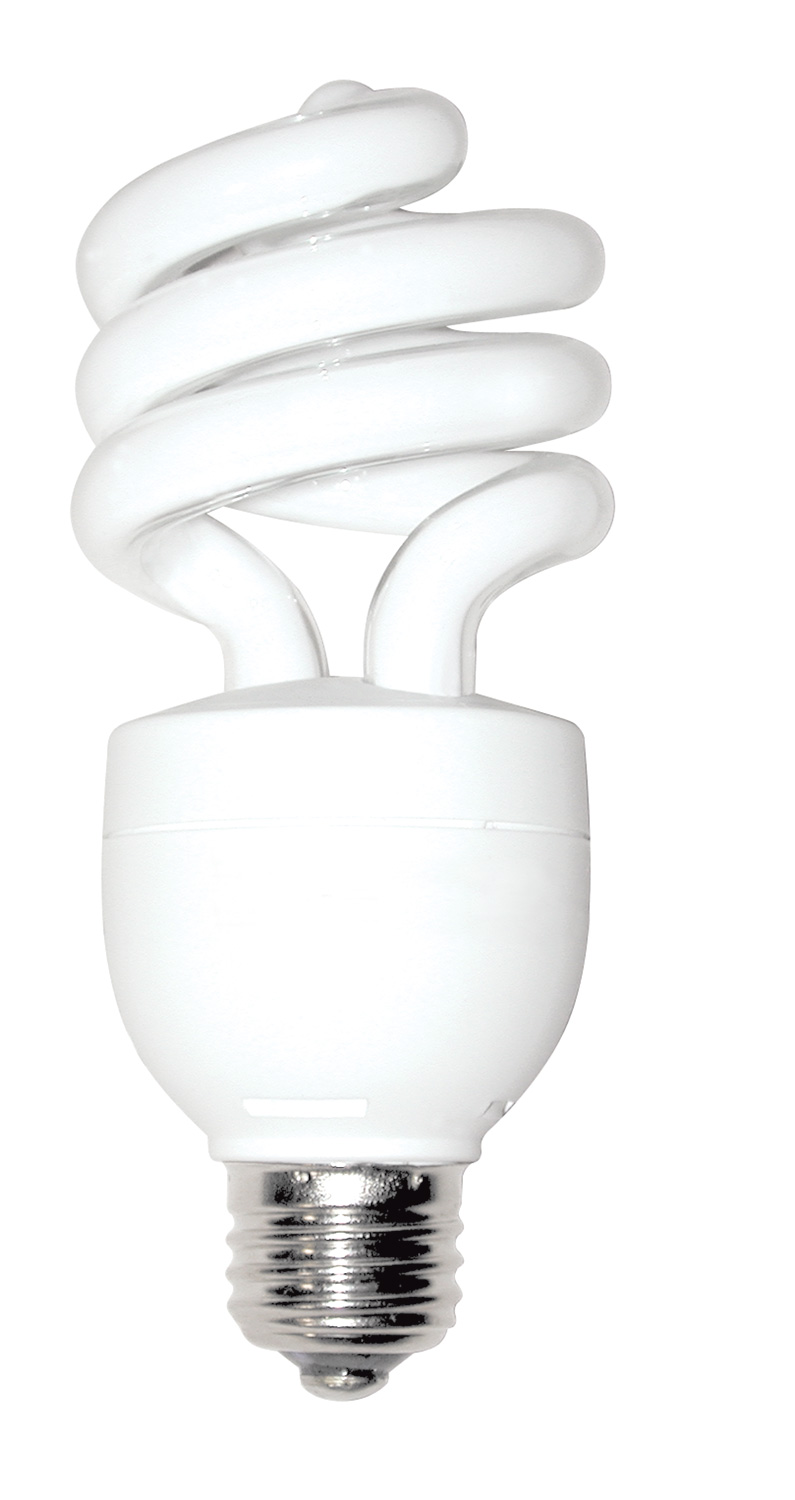
Today’s Energy Star spiral CFLs are designed to mimic the shape of an incandescent bulb and can be used in any ordinary lamp. The magnetic ballast that caused the flickering and buzzing in the old bulbs has been replaced in all but the cheapest bulbs by an electronic ballast with an undetectable flicker and, in most cases, no sound at all. These new bulbs light up instantly.
You can now buy CFLs that mimic the soft yellow-white light you’re accustomed to in an incandescent bulb, in addition to the ones that mimic the bluer white of natural daylight. Lampshades further disguise any difference in appearance.
Fluorescent bulbs are coming down in price rapidly, but they are still a little more expensive to buy than incandescent bulbs. But they last 5 times as long, so when you’re buying one CFL, you’re buying the equivalent of five incandescent bulbs. And since CFLs use about a fifth of the electricity of incandescents, incandescent bulbs cost an average of $40 more per fixture to operate than CFLs. Now that’s expensive! It takes an average of six months to recoup the cost of a CFL in lower electricity bills. Your CFL will last a lot longer than six months.
Some people have pointed out that CFLs contain mercury. Won’t using CFLs put even more mercury in the environment?
Paradoxically, no. When you use an incandescent bulb, you’re using more electricity, and half of our electricity comes from coal-fired plants that discharge mercury into the atmosphere. Thus, each 100-watt incandescent bulb indirectly causes 10 milligrams of mercury pollution, while a 23-watt CFL (the equivalent of a 100-watt incandescent) causes only 2.4 milligrams of mercury pollution.
Of course, there are tiny amounts of mercury in CFLs—far less than in mercury thermometers—and used bulbs need to be disposed of responsibly. Just recycle them the same way you recycle your other hazardous waste (paint, solvents, used motor oil and so forth). Because CFLs last so long, you probably don’t need to recycle more often than every couple of years.
WARNING: A
story has been circulating about a woman in Maine who broke a CFL in her child’s bedroom and had to seal off the room and hire an expert to do $2,000 worth of cleanup. Read the whole article. The Department of Environmental Protection says that you can clean up broken CFLs safely using household materials. The official who inspected the child's room was probably following guidelines for cleaning up broken thermometers, which contain 100 or more times as much mercury as CFLs.
Read
more on mercury and CFLS. The link also contains disposal and cleanup guidelines.
Want your CFL light to look like incandescent light? Recently, manufacturers started adding information about “color temperature” to the bulb’s packaging. The color of the light is represented by a number in K units. The higher the number, the bluer the light. “Soft” light CFLs range from 2700 to 3000 K, while bulbs with bluer light that mimics daylight are 5000 K or higher.
Some purchasing guidelines:
- 25-watt incandescent = 7-watt compact fluorescent
- 40-watt incandescent = 11-watt compact fluorescent
- 60-watt incandescent = 15-watt compact fluorescent
- 75+-watt incandescent = 18-watt compact fluorescent
- 100-watt incandescent = 23-watt compact fluorescent
Ordinary CFLs won't work with dimmer switches. Use a
CFL specially designed for dimmers.
Three-way CFLs are also available.
Read an exhaustive
Popular Mechanics evaluation of CFLs and brand comparisons. The evaluation's test participants actually rated today's CFLs as having BETTER light quality than incandescents.
Find out more:
18Seconds.orgEnergyStar (Take the
Energy Star quiz)
Department of EnergyEnvironmentalDefense.org (Tips on choosing and using CFLs)
WikipediaFast Company articleCFLBulbs.comWhere to recycle your bulbsLabels: CFL, compact fluorescent, energy efficiency, global warming, lighting


